> For the complete documentation index, see [llms.txt](https://community.commandersact.com/customer-success/llms.txt). Markdown versions of documentation pages are available by appending `.md` to page URLs; this page is available as [Markdown](https://community.commandersact.com/customer-success/francais-1/inspiration/cycle-client/retention-des-clients/detection-of-customers-at-risk-of-churn.md).
# Detection of customers at risk of churn
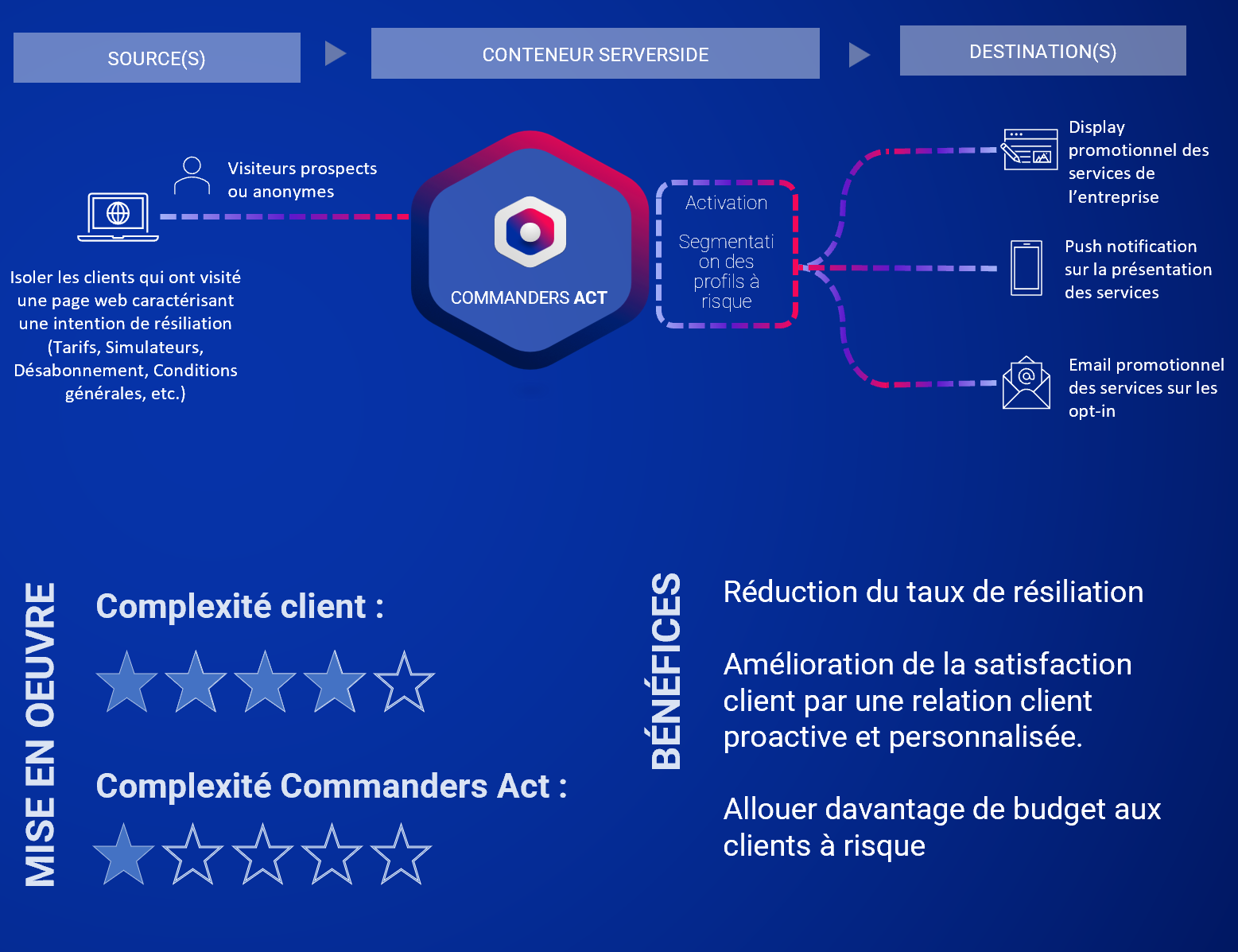
Anticipez et soyez proactif. Détectez les clients visiteurs susceptibles d'annuler un abonnement en ligne en analysant leur comportement de navigation sur vos sites web et applications mobiles.
## Objectif :
* Prévenir l'attrition de la clientèle
### Description :
* J'aimerais utiliser le comportement de navigation sur mon site pour détecter les visiteurs qui risquent de quitter mon site et mettre en place des actions de fidélisation.
### Comment ça marche
1. Je configure le Commanders Act X TMS pour collecter le comportement de navigation de mes visiteurs.
2. Je segmente mon audience en fonction du comportement de navigation. (ex : sur les personnes ayant consulté les conditions générales de vente...)
3. Je définis mes destinations et j'active mon audience sur le canal de mon choix.
### Download :
{% file src="/files/4oakC7K8Z3W4UhqRvD0D" %}
### Vous souhaitez nous contacter **:** [**Cliquez ici**](https://www.commandersact.com/fr/contact/)